KubeCon NA 2023 Field Retrospective: Telemetry Pipelines, Structured Logs, and Cloud Cost Realities
In November 2023, over 9,000 engineers gathered at McCormick Place in Chicago for KubeCon + CloudNativeCon North America 2023.
Beyond the crowded expo halls and vendor marketing, the technical sessions revealed an industry-wide pivot: cloud-native teams were shifting focus from raw infrastructure deployment to deep operational legibility, telemetry pipeline efficiency, and sustainable cloud economics.
Here is my four-day technical field retrospective, drawn from primary session notes and architectural slides across the conference.
Day 0: Observability Day, Treating CI/CD as a Distributed System
Observability Day made one point unmistakably clear: your deployment pipeline is a mission-critical distributed system, yet most engineering organizations still debug builds by scrolling through megabytes of unindexed terminal output.
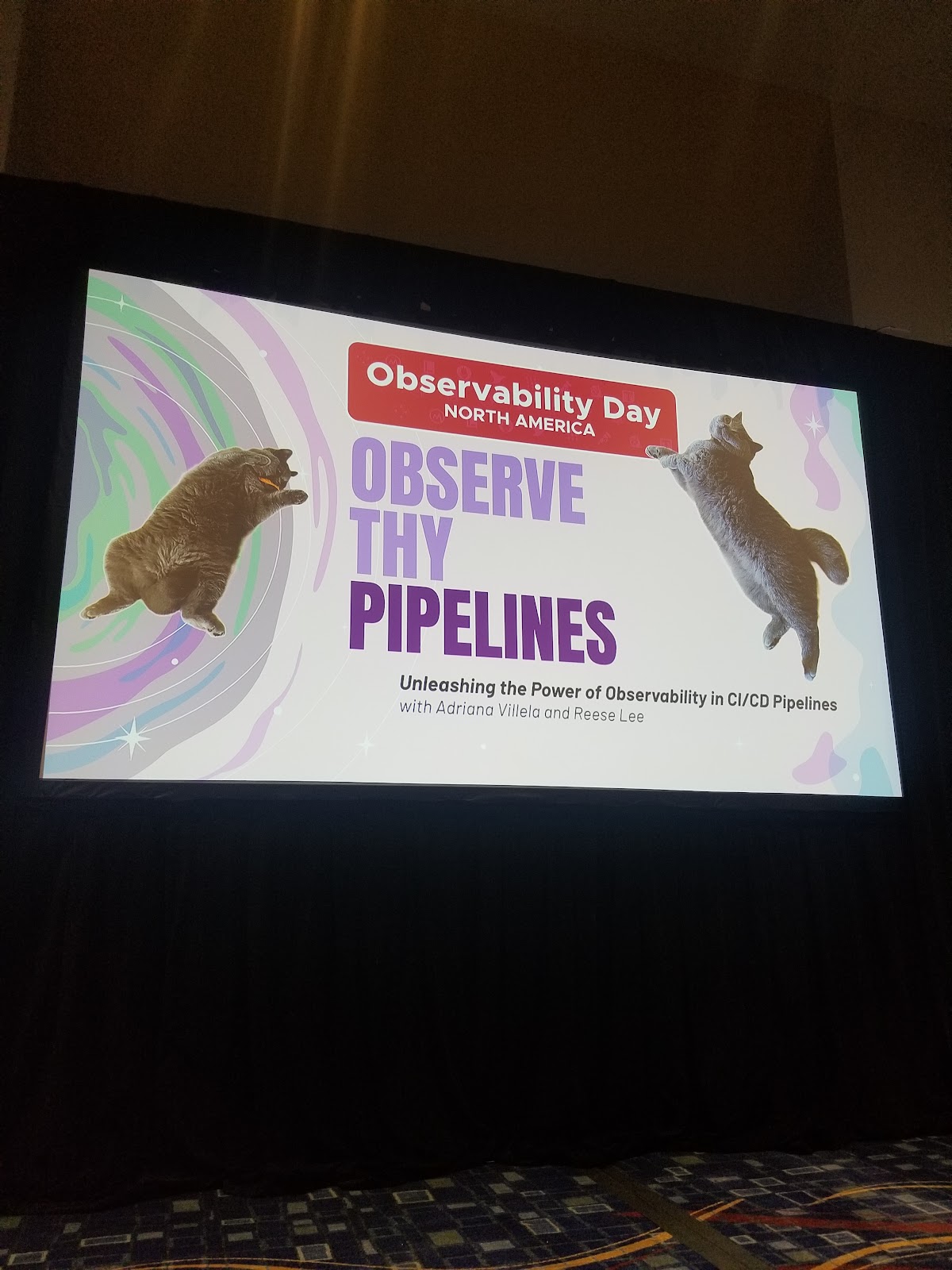 Adriana Villela and Reese Lee presenting “Observe Thy Pipelines” at KubeCon NA 2023 Observability Day.
Key takeaways from the session:
- Pipelines Need Traces, Not Just Text Logs: Treating pipeline stages, test runners, and artifact packaging as OpenTelemetry spans transforms opaque CI build times into clear waterfall diagrams.
- Finding the Flaky Test Bottleneck: Standardizing CI spans with semantic attributes exposes flaky integration tests and slow runner provisioning instantly.
- Closing the Feedback Loop: When developers inspect failing pull requests through telemetry dashboards instead of raw console text, mean time to diagnosis drops from hours to minutes.
Day 1: Kubernetes Core, The Push for Structured Logging
In the main conference track, the Kubernetes Working Group for Structured Logging (#wg-structured-logging) presented a crucial update on migrating the Kubernetes control plane away from free-form string printing.
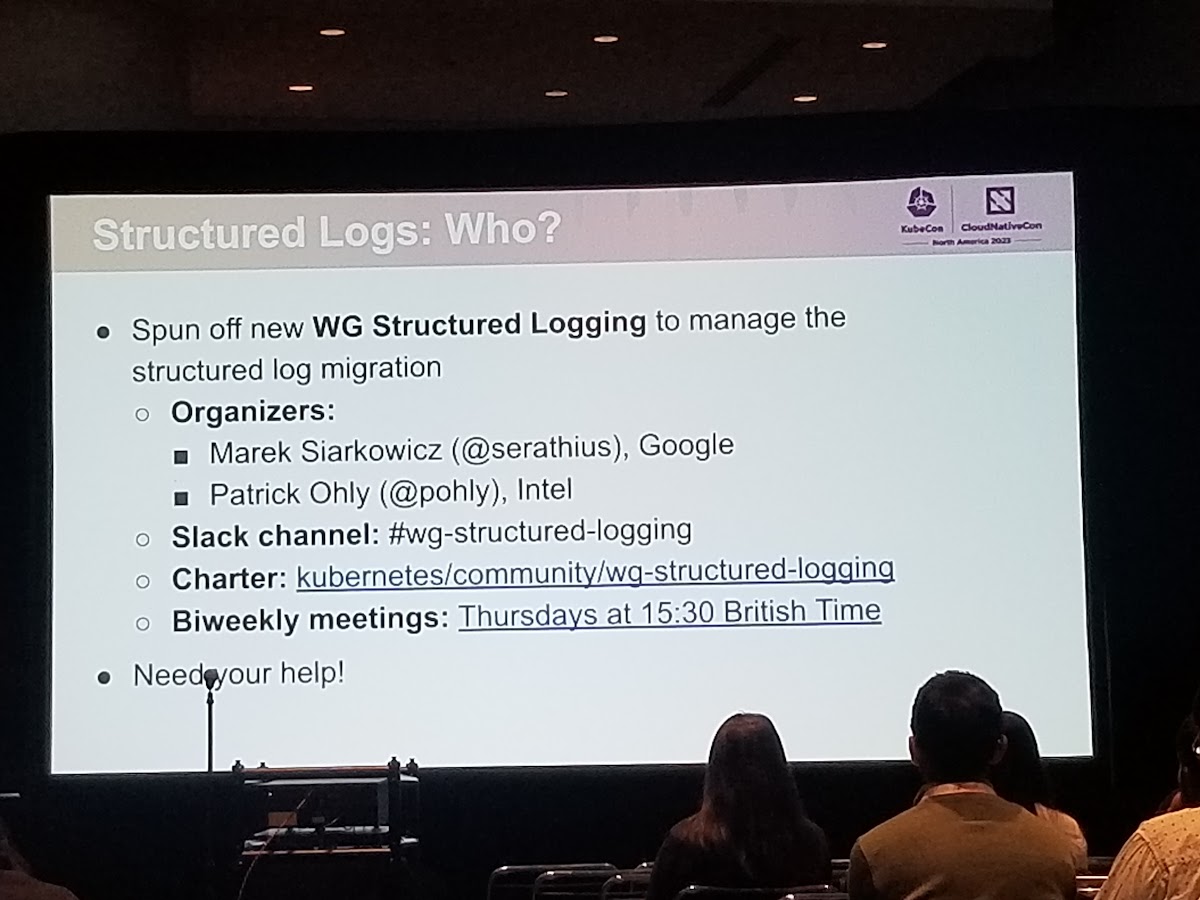 Marek Siarkowicz (Google) and Patrick Ohly (Intel) detailing the migration to structured logging in Kubernetes core.
Why structured logging matters for cluster reliability:
- Eliminating Fragile Regex Parsers: Historically, Kubernetes components emitted unstructured string logs. Log ingestion collectors had to rely on brittle regular expressions to extract pod names, namespaces, and error codes.
- Contextual JSON and Key-Value Payloads:
By embedding structured key-value pairs directly in
klog, operators can query control plane events with zero parsing overhead. - Standardized Log Verbosity: The working group established clear boundaries between informational status logs, debug traces, and critical reconciliation failures.
Day 2: Fluent Bit, The Universal Telemetry Workhorse
On Day 2, technical deep dives centered on Fluent Bit and its evolution from a lightweight log forwarder into a unified telemetry processor handling logs, metrics, and distributed traces.
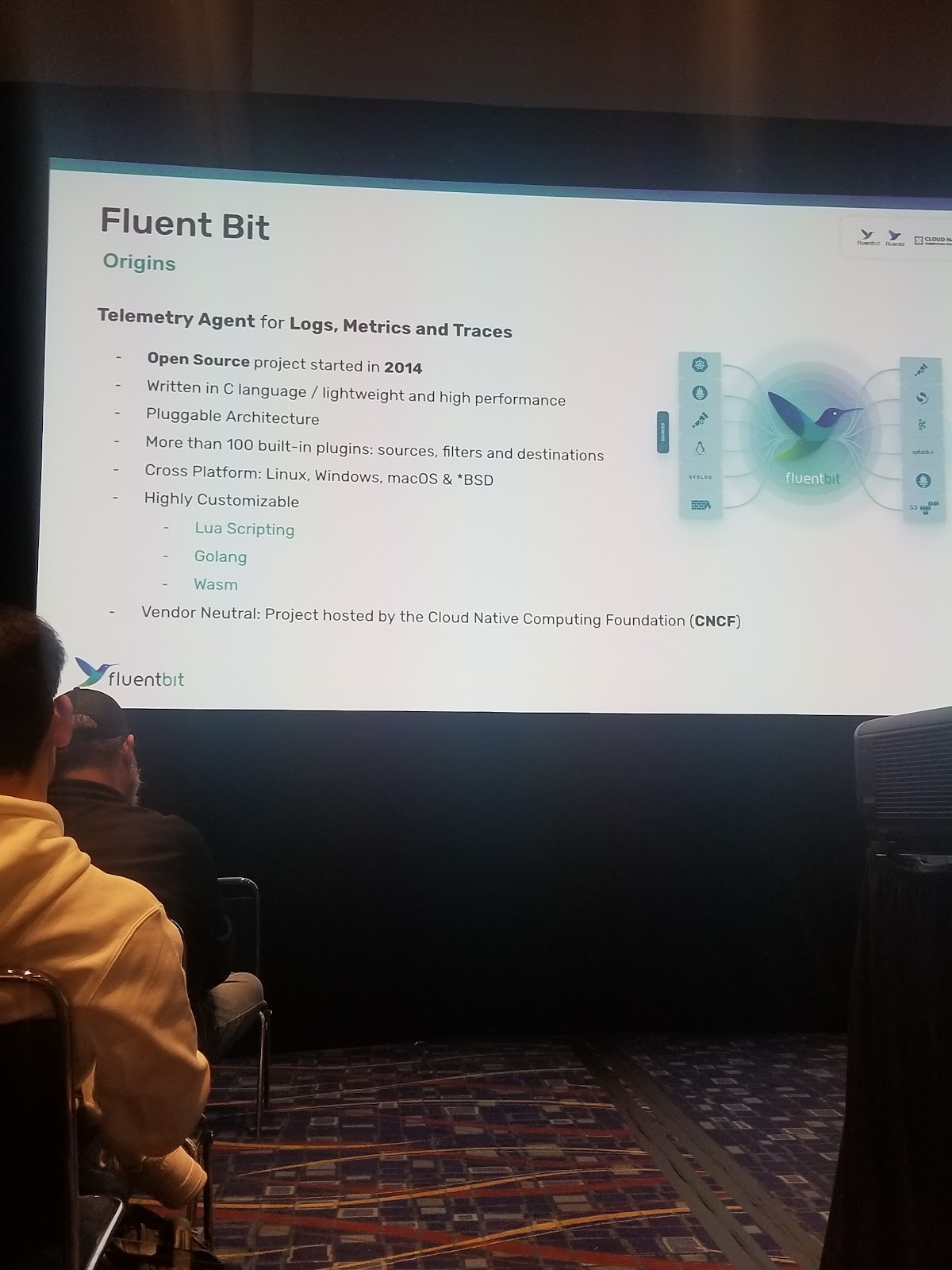 Fluent Bit architecture: High-performance C core with Lua, Go, and WebAssembly extensibility.
Core architectural strengths highlighted:
- Low Memory Footprint at Scale: Written in C with pluggable buffer management, Fluent Bit processes hundreds of thousands of events per second while consuming only tens of megabytes of memory per node daemonset.
- Extensibility with Lua and Wasm: Teams can write lightweight transformation filters in Lua or compiled WebAssembly modules without recompiling the upstream binary.
- OpenTelemetry Interoperability: Fluent Bit bridges legacy syslog and journald sources with modern OpenTelemetry Protocol (OTLP) collectors, providing smooth migration paths for complex enterprise topologies.
Day 3: FinOps & Cloud Cost Postmortems, Engineering the Bottom Line
The closing day focused heavily on cloud unit economics. Multiple organizations shared candid incident retrospectives detailing runaway cloud bills and unexpected data transfer spikes.
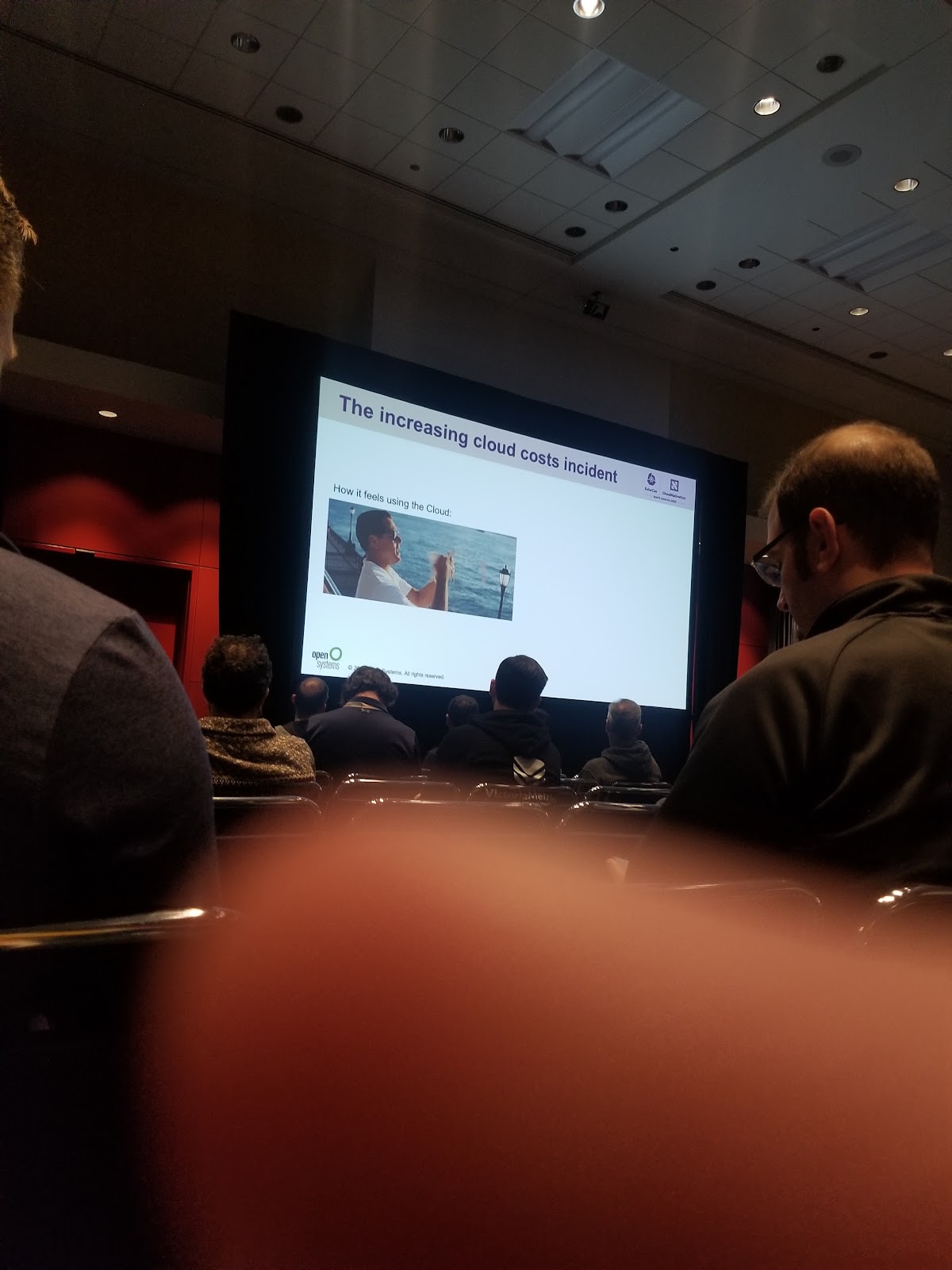 Realities of scale: Dissecting unexpected cloud cost surges and architectural remediation.
Lessons from the field:
- Cost Is an Architectural Constraint: Uncontrolled telemetry egress and unpruned debug logs frequently account for 20–30% of total cloud infrastructure bills.
- Sampling at the Edge: Filtering high-volume, low-value health-check traces before sending them across cloud regions protects both monitoring backends and budgets.
- Automated Resource Quotas: Enforcing strict memory limits, storage pruning policies, and ephemeral staging teardowns prevents silent cost accumulation.
Summary: The Maturing Cloud-Native Stack
KubeCon NA 2023 demonstrated that our discipline is maturing:
- Observability is foundational: Telemetry belongs in CI pipelines, not just production servers.
- Data contracts matter: Structured logs and open protocols replace proprietary agents and custom parsers.
- Efficiency wins: Great architecture delivers high reliability while keeping compute and storage bills sustainable.
Related Reading: