Welcome to the archive
UGtastic
User-groups? Fantastic! A record of the people, ideas, and small production choices that made technical community visible.
01 · Notice the mark
Logos, marks, avatars
Start with the mark. Before there was a catalog, there was a recognizable way to say, “this conversation belongs here.” These recovered assets are shown as artifacts from the changing identity, not as a claim that one version replaced another on a precise date.




02 · Listen for the turn
The soundtrack
Once the series had a visual identity, it began to sound like itself too. The late-series music is part of that turn. The recovered production archive includes an audio file identified as “Life of Riley” by Kevin MacLeod. The two public tracks below are the SoundCloud references currently connected to UGtastic.
The recovered local audio source is held out of this public exhibit until it is confirmed identical to a published interview. The players below remain SoundCloud embeds.
03 · Step back
Watch the community change shape
Now step back from the individual artifacts. The interview ledger gives us one view of the arc. The production archive gives us another. Put them together and UGtastic looks less like a single show and more like overlapping experiments in community, technology, and presentation.
Interview eras
184 indexed conversationsCounts come from the generated interview timeline. Era boundaries are archive groupings, not claims that the work stopped and started cleanly at midnight.
Early conversations connect local user-groups with the wider software craftsmanship movement.
Explore the SCNA interviewsRails, testing, security, and the people building the tools become a dense middle chapter.
Explore RailsConf coverageDistributed systems, Clojure, Java, C#, and the interview format widen together.
Explore GOTO coverageBranding and commissioned audio turn separate conversations into a recognizable series.
See the public audioFour kinds of time
Same archive, different clocksDirect conversationsEarly years: the camera and the question do the work.
Repeatable seriesExpansion: recurring events, names, and visual habits make the archive legible.
Packaged episodesPeak production: soundtrack, title treatment, and outro make an episode feel like UGtastic.
Searchable memoryLater years: transcripts, metadata, and linked timelines make the back catalog useful again.
The production-language notes are a synthesis of recovered assets and archive metadata. They describe visible patterns, not a claim that every episode used every treatment.
Open the full timelineCompare the archive layers in the Atlas
04 · Keep the honest gap
Episode music notes are gated
Raw WITC and Vimeo media are not used to assign intro or outro labels here unless the file is first confirmed identical to the published interview. The SoundCloud tracks remain available as public references. Episode-level music notes will appear after that identity check.
This keeps source identity, copyright, and publication provenance separate. No raw interview audio is republished by this exhibit.
05 · Look at it in use
Screenshots from the evolving surface
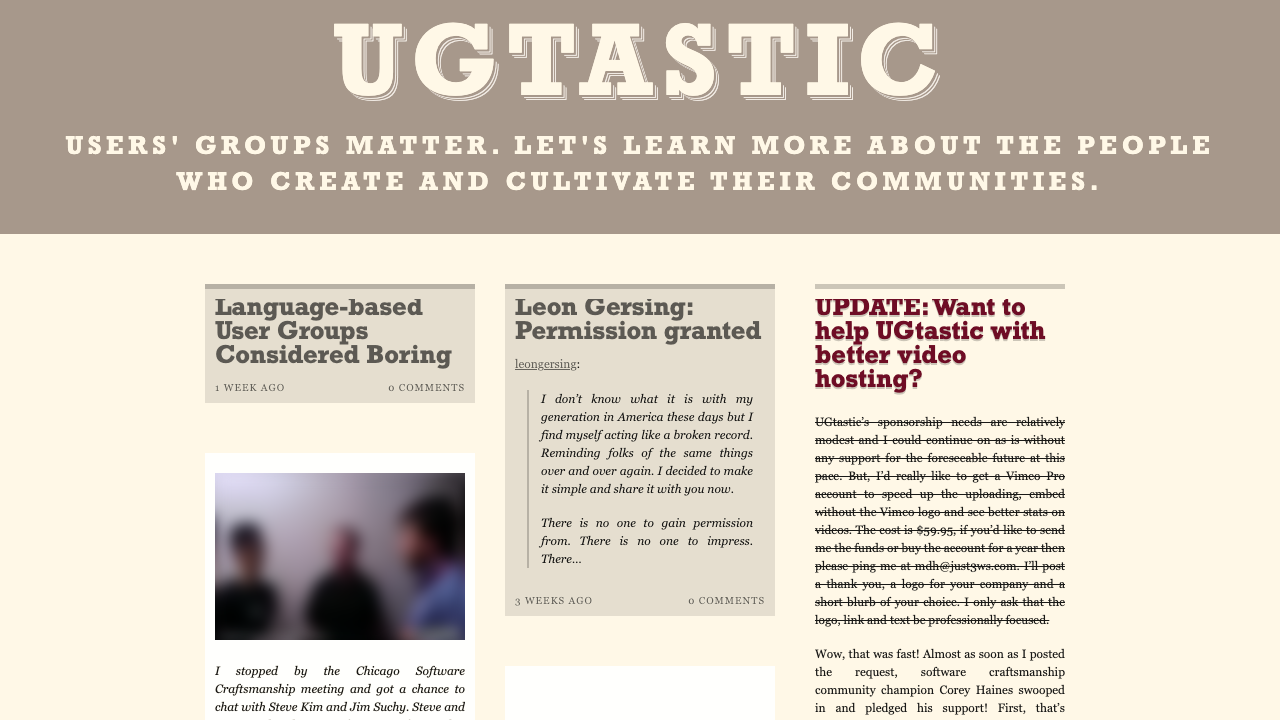
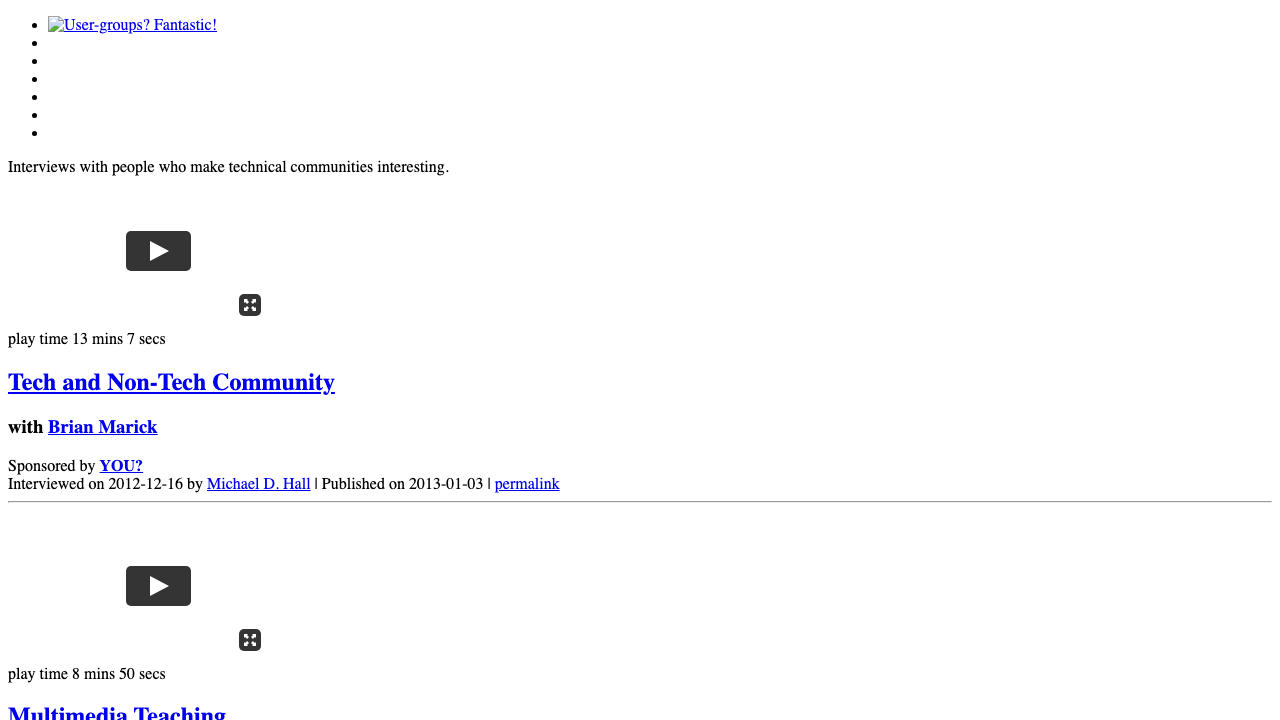
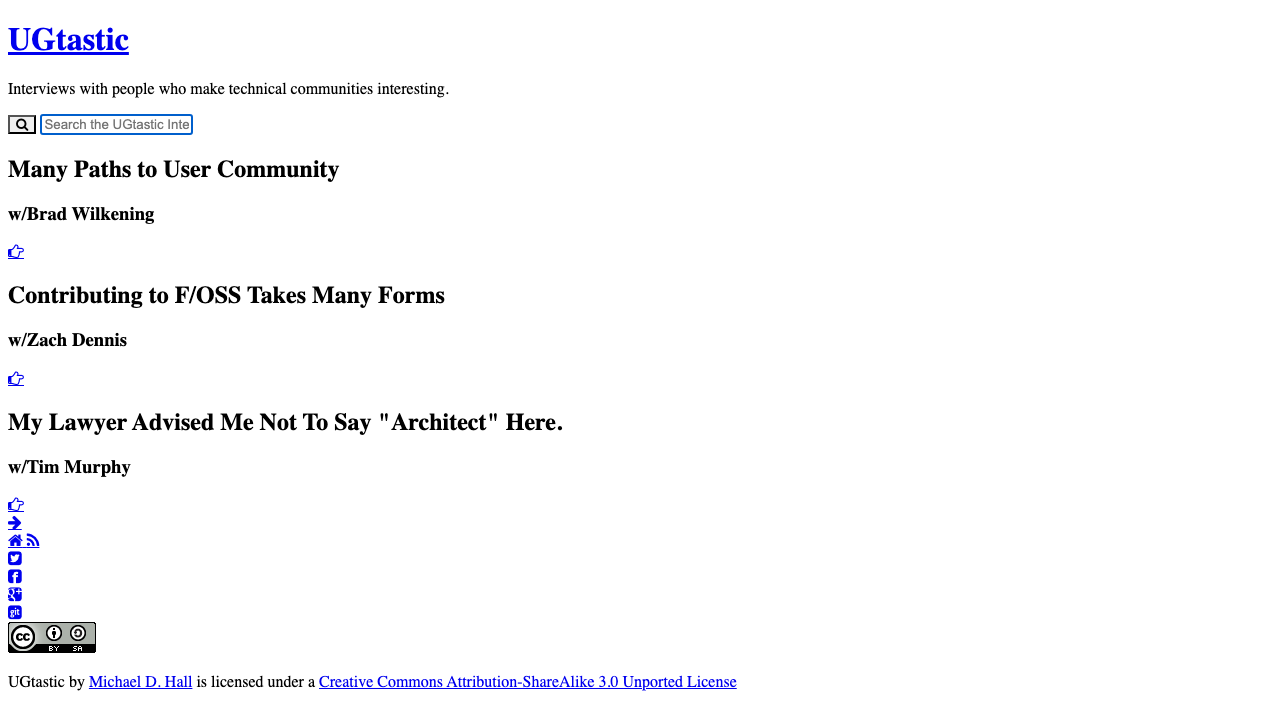
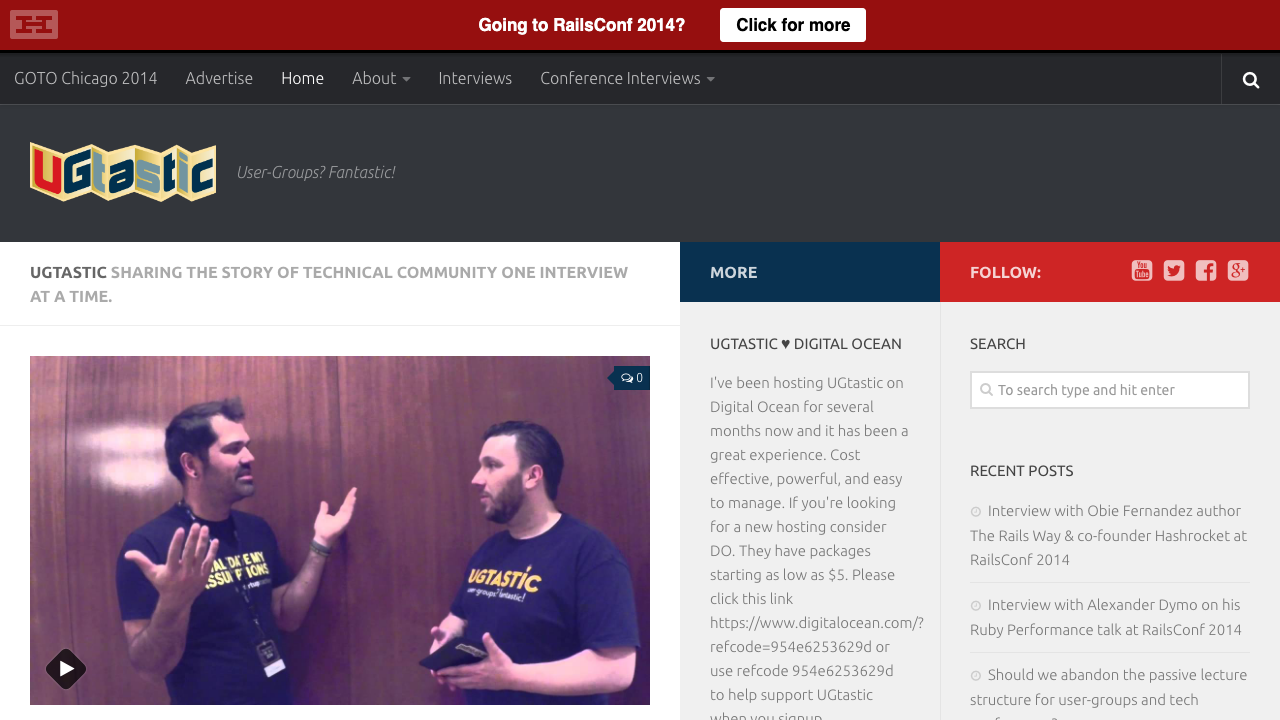
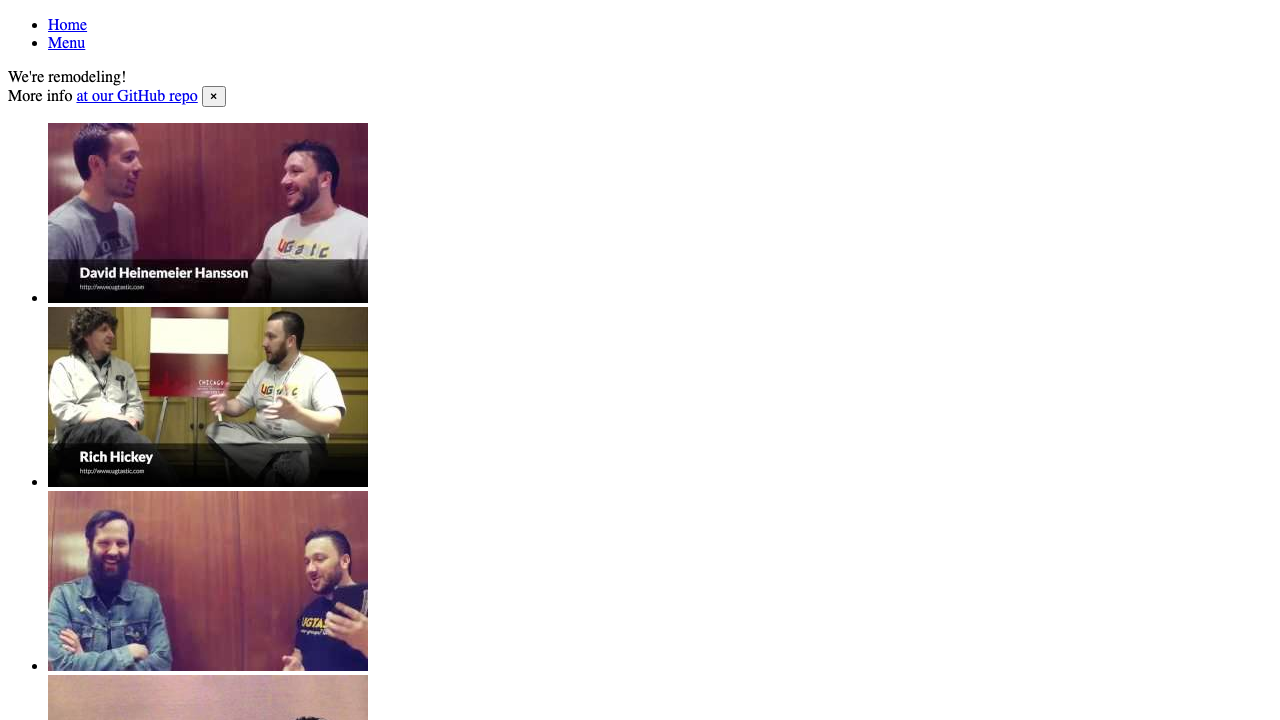
A mark is only part of a public identity. These dated screenshots show how the identity lived in the site, where people actually encountered the conversations.
06 · Follow a thread
The fun is still connected
07 · The rewatch series
The Sound Above
A live oral history rewatch series revisiting the 211 UGtastic interviews through a 2026 lens. 21 episodes. 5 eras. Each session asks: what were these people actually building, and what does it mean now?
The Sound Above is produced live in OBS Studio using a craftsmanship-theme production stack. Scene collection, overlays, and episode sequence: obs/ in the site repository.